Kubu Rattan vs Synthetic Wicker: Which Should Retail Buyers Specify?
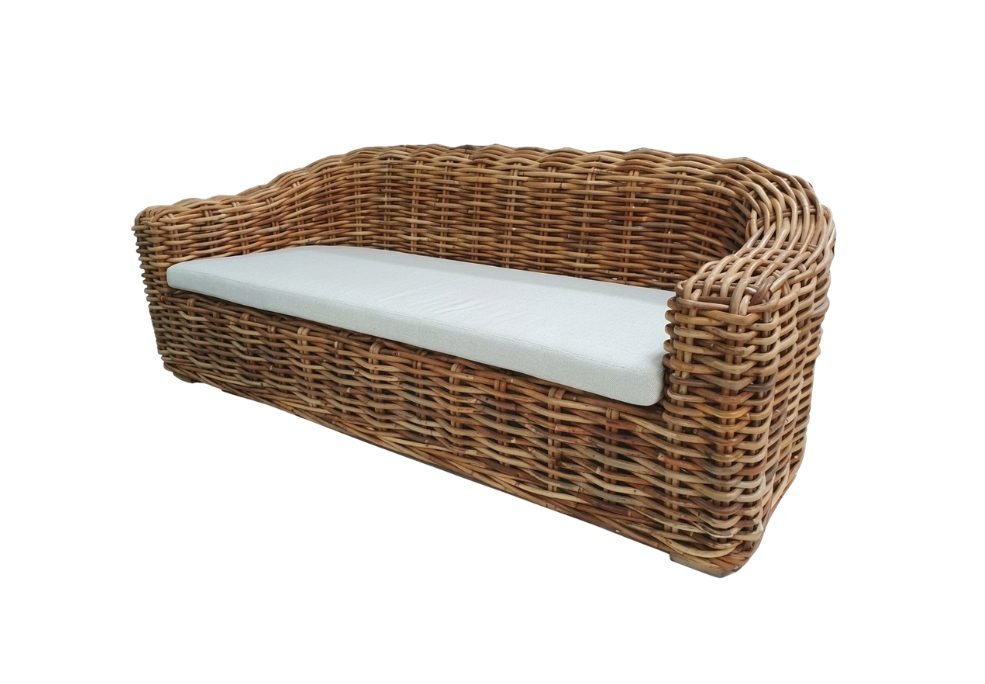
In short: Kubu rattan is a natural, renewable fiber with organic variation, best used indoors or in covered spaces. Synthetic wicker is an engineered resin that suits fully exposed weather. Neither is better in every case; the right choice depends on where the furniture will stand.
What is Kubu rattan?
Kubu rattan is thick, unpeeled rattan with the natural bark left on. Because the skin is kept, every pole has its own color and grain. Our Kubu Grey is produced by curing poles in mineral-rich clay ponds in Cirebon, a process explained in Mud-Pond Curing. The result is a natural tone through the outer skin, not a surface paint.
What is synthetic wicker?
Synthetic wicker is a woven resin, usually high-density polyethylene, extruded into uniform strands and woven over a metal frame, most often aluminium. It is engineered to look like natural weave while resisting water and sunlight.
Kubu rattan vs synthetic wicker: side by side
- Look and feel: Kubu has organic variation, visible grain and a warm hand. Synthetic is uniform and smooth, with a consistent color from piece to piece.
- Weather: Synthetic handles rain and sun without special care. Natural rattan performs best indoors, in sunrooms, or under cover, and should be protected from constant rain and strong direct sun.
- Repair: Natural rattan can be re-woven or re-sealed by a craftsperson. Broken synthetic strands are harder to repair invisibly.
- Ageing: Natural rattan ages gracefully and develops character. Synthetic keeps its look until the resin degrades.
- Environmental profile: Rattan is a renewable, biodegradable fiber. Synthetic wicker is petroleum-based and harder to recycle at end of life.
- Odor and finish: Kubu Grey is finished with a water-based matte sealer. Cheap solvent-dyed imitations can scratch or give off a chemical smell.
Which should you specify?
Choose natural Kubu rattan for living rooms, boutique retail floors, hotel guestrooms, lobbies and covered terraces, where the look and warmth are the selling point. Choose synthetic where furniture will sit fully exposed all year, such as poolside areas with no shelter. Many hospitality projects use both: natural pieces inside, resin pieces outside.
How each material behaves over time
Natural rattan is a living-material product. It takes on moisture in humid rooms and gives it back in dry ones, and good frames are built with that movement in mind, which is one reason we dry every piece to 10%–12% moisture content before it ships. Over years, the surface softens and the color deepens, and a light re-seal can refresh it.
Synthetic resin does not move with humidity, but it does respond to heat and ultraviolet light. Lower-grade resin can become brittle or chalky after long sun exposure, while good-quality UV-stabilised resin lasts much longer. The honest answer is that quality varies widely inside both categories, so judge the specific product, not the category.
What this means for retail and hospitality projects
- Boutique retail: natural Kubu photographs well, tells a story about origin, and supports a premium price position.
- Hotel interiors and lobbies: natural rattan suits guestrooms and covered public areas where the warmth is part of the design.
- Mixed-use projects: specify natural rattan for sheltered areas and resin for exposed ones, and keep the color palette consistent between them.
- Online sellers: consider return risk. Pieces that will sit outdoors uncovered in wet climates are better served by resin.
The right answer is the one that matches how your end customer will use the piece. If you are unsure, tell us the setting and climate, and we will say plainly whether natural rattan is a good fit.
What to ask your supplier
- Is the grey color natural curing or a surface dye?
- How is moisture controlled before shipping? (We dry to 10%–12%; see our moisture guide.)
- What sealer is used, and is it water-based?
- What indoor or covered-use guidance do you give your own buyers?
If your project needs a particular finish, size or weave, our OEM team can prototype it in about 10 days. Browse the finished range in Living Suites and Chairs.
Planning a wholesale or OEM order?
Browse the full catalog, read the Buyer FAQ, or talk to us about OEM and private label.