Rattan vs Wicker vs Cane: What Is the Difference?
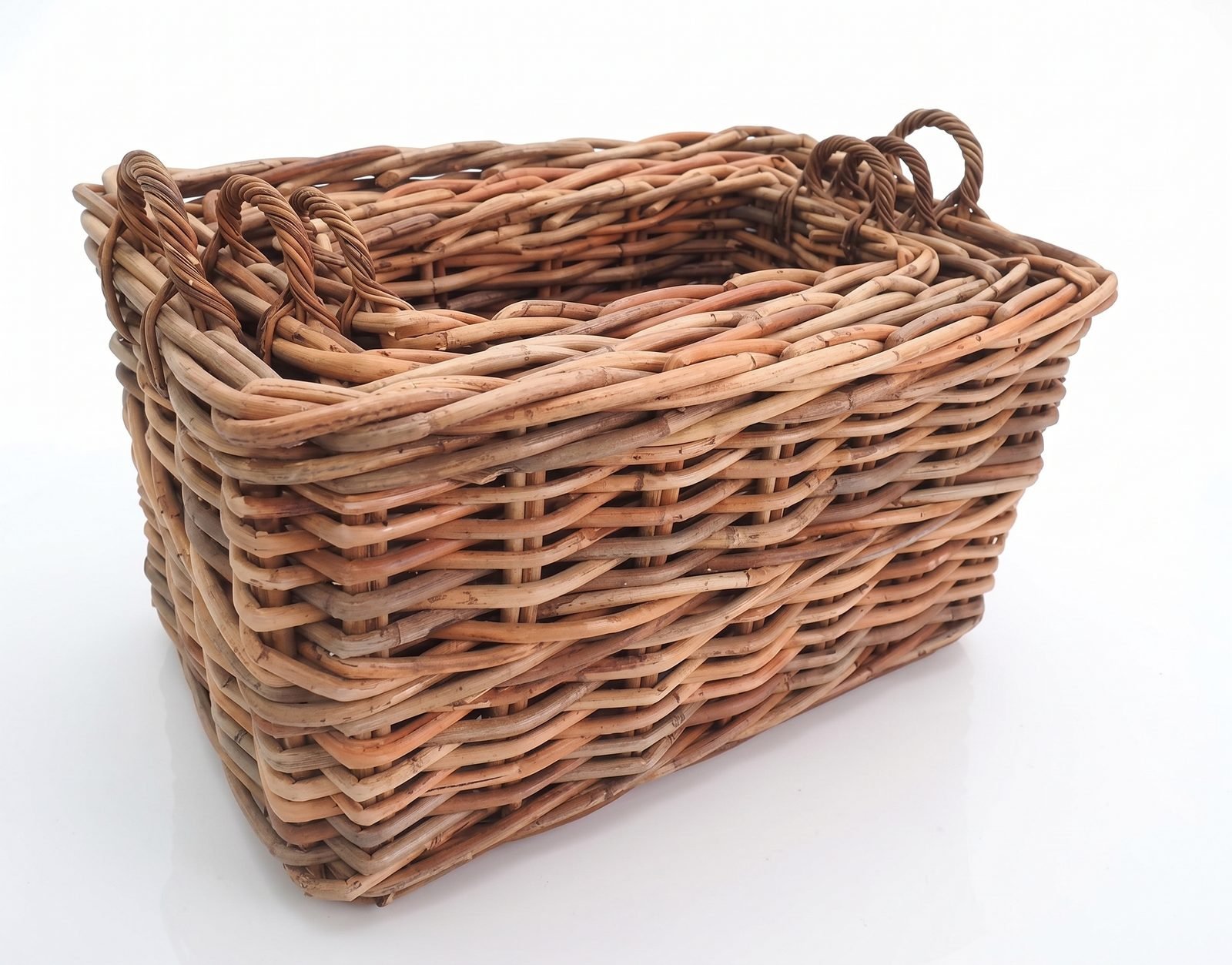
In short: Rattan is the climbing palm and its stem, cane is the stripped outer skin of that stem, and wicker is a weaving technique that can use rattan or other materials. On a spec sheet they describe three different things.
What is rattan?
Rattan is a group of climbing palms that grow in tropical forests, mostly in Southeast Asia. Indonesia is a major source. The stem is solid, strong and flexible when steamed, which is why it is used for chair frames, poles and baskets. Large-diameter stems such as Manau are steam-bent into frames and arches, while thinner stems are used for weaving.
What is rattan cane?
Cane is the hard outer skin of the rattan stem, peeled off in thin ribbons. It is the material used for woven cane webbing on chair seats and cabinet doors. The inner part that remains after peeling is called the core, or reed, and is cut into round strands for weaving baskets and furniture. So when a supplier says cane, ask whether they mean the skin, the webbing, or the whole pole.
What is wicker?
Wicker is not a material but a method: the craft of weaving flexible strands over or around a frame. Wicker can be made from rattan, willow, bamboo, reed or synthetic resin. A piece described as wicker may therefore be natural or synthetic, so it tells you how it is made, not what it is made of.
Quick comparison
- Rattan: the plant and its solid stem. A raw material.
- Cane: the outer skin of the stem, used for webbing and binding. A part of the raw material.
- Wicker: the weaving technique. A way of making a product.
Where Kubu and Manau fit in
Kubu refers to thick rattan with the bark left on, which we cure into Kubu Grey. Manau cane poles, 28 to 35mm thick, are steam-bent into chair spines and architectural loungers. Both are still rattan. Read more in Mud-Pond Curing.
How to read a rattan product description
Product listings use these words loosely. As a rough guide, if a description says rattan chair, it is made from the plant stem, either as poles or woven strands. If it says cane seat or caned back, it uses woven cane webbing, usually the peeled skin. If it says wicker, it describes the weave, and you should ask for the material underneath.
Other terms you will meet
- Rattan core or reed: the round inner strands left after the skin is peeled, used for weaving.
- Rattan peel: the flat outer skin, used for binding and weaving. Our Natural CL Toasted rattan uses sun-cured peel.
- Water hyacinth: a different plant, not rattan, woven into products such as our butler tray.
- Bamboo: a grass with hollow stems. It is sometimes confused with rattan, but it is a different material with different strength.
A short checklist for your spec sheet
- Name the plant material: rattan, bamboo, water hyacinth or synthetic.
- State the form: pole, core, peel or cane webbing.
- State the frame: rattan, solid hardwood, metal or other.
- State the finish: natural, stained or sealed, and whether it is water-based.
Why this matters for search and for sourcing
Buyers search using all three words: rattan furniture, wicker furniture and cane furniture. They overlap, and good suppliers use them accurately. If you are writing product pages for your own customers, use rattan for the material, wicker for the weave and cane for webbing, and your descriptions will be both correct and easy to find.
Why it matters on a purchase order
Buyers sometimes compare quotes where one factory says rattan and another says wicker, and assume they are different products. They may be identical, or one may be synthetic. Always write the material on your spec: natural rattan, rattan core, or synthetic resin, plus the frame material.
See how these materials appear in our range in Baskets and Chairs, and the full material list in our Buyer FAQ.
Planning a wholesale or OEM order?
Browse the full catalog, read the Buyer FAQ, or talk to us about OEM and private label.